Showing posts with label RPG Design. Show all posts

8/10/2026

What's Forever For?

Feeling the Heartbeat of HTT, and the Cumberland Style


While I’ve been groping around for the tools and language for HTT (the High-Trust Traditional style of play Cumberland is devoted to) for as long as I’ve been a gamer, I’ve only blathered about it openly since the days of Google Plus, that platform Google hit-and-quit back in the day.

And my methods of trying to convey what it is have changed over the last 15 years or so, as dozens of perfectly-clear-to-me explanations have crashed and burned. Often, it’s mistaken for some tangentially-related idea. “Oh, you mean sandboxes!” No, if I meant sandboxes, I’d just say sandboxes. “Oh, you mean FKR!” No, if I meant FKR, I’d just say FKR. “Oh, you mean immersion!” No, that sounds comfy but it’s not what I mean. And so on.

It's often the case that we round to the nearest familiar idea.

Sometimes, not often, someone will be like “Oh, you mean … basically every Trad RPG ever.

And … kind of! That’s closer! It’s still not there, but it’s more true than the others.

Because if you play any trad RPG long enough, you’ll have HTT moments. Depending on the prep-habits of the GM, and the roleplay-focus of the table, they’ll be more frequent, or less so.

HTT is about designing to support those moments as more than moments: they can be the dominant mode of play. Sessions or campaigns made of HTT moments. Or, as close as we can manage! It’s soup.

If that sounds mushy: yep. This is a spectrum of emphasis. It’s not about hard white lines. It’s not remotely puristic. It’s about wanting more of a thing, and recognizing that there are others who want more of a thing, and recognizing what kind of RPG design supports that desire.

So, You’re Like Someone Who Loves Pickles on Your Burger So Much That You Pile Your Burgers With Pickles?

Yes I do and yes, I do.

But back to RPGs.

Thirty-something years ago, I thought the heart of what I love in RPGs was Tactical Infinity, and I said so, on convention panels, in correspondence, and eventually named it in an article. That term has even gained traction over the years, in some of the other RPG neighborhoods.

But I was only partly right, and it took nearly ten years (because I was eyeballs-deep in the industry for that time) to appreciate the emphasis that phrase was missing. As I noticed exactly what that was, I happily expressed it in my work, from Vanth to Uresia to the Risus Companion and beyond, though it crystallized, almost entirely, in the early Fly From Evil runs. Once I started supporting more than just Tactical Infinity, those magic moments started flooding every session.

And, ridiculously, it was just … character. Character nature, character values. The phrase I needed, to honestly describe the design I needed, was Characterized Tactical Infinity, or CTI to save some typing. 

But Isn’t Tactical Infinity Already Characterizing?

That’s what I had been hoping, but the answer is: sometimes. Not always and, honestly, not usually. Not with a great deal of depth, if it’s unsupported by anything but attitude. I mean, great roleplayers are going to be great without support, but without support, their great roleplaying is often reduced to decoration, atop the gameplay.

That’s what I meant about the GM’s prep habits, and the table’s roleplay focus. Those can turn the “sometimes” into some version of “pretty often,” or more. Or, in many cases, a whole lot less. When it’s a whole lot less, that’s Low-Trust Trad, or LTT. The bulk of 80s and 90s RPG material were designed around the mushy middle ground, regular old Trad, or Medium-Trust Trad. That’s also, I think, where most campaigns landed: somewhere in that big ol’ middle, where pickles are something on the burger.

My own work for the RPG industry (my GURPS and Star Trek stuff and so on) was almost entirely MTT, with a few LTT jaunts as the work demanded, and some visible yearnings for HTT.

One of the social-media graphics
I use for introducing folks to HTT.

So You And Your Gamers Sit Around Talking Like This?

Oh! No. Very much no.

This isn’t table terminology at all. We don’t have or need any special table terminology. We just show up and roleplay, the GM is a regular GM doing the regular GM things. We put our d8s on one leg at a time, like anyone.

In fact, if we did show up to the table, determined, as players, to “play HTT,” we would fail to do so. Ironic but true. Only roleplaying gets us there. We show up to roleplay. Our characters’ perspectives are all we give a wet slap about, in play.

The GM alone can support the leap from that to HTT, and it won’t get there by us blathering about it at the table. The GM gets it there through prep.

The wonky language is design stuff. Crafty stuff. Its only value is to RPG design, and it’s mostly about scenario design, specifically (with a dash of worldbuilding).

Because the mushy middle isn’t some compromise. It’s the logical consequence of trad’s own shape and nature, and, frankly, MTT is awesome. If I could play in well-run MTT campaigns for the rest of my life, I’d be pretty content. I’d still feel that extra-special tingle in those HTT moments, but, with a good GM doing old-fashioned 80s-and-90s-style prep, those moments would be frequent enough.

Oh. Is That Nostalgia I Smell?

It’s mostly pickle juice. But generally, a firm no in the sense that I’m not interested in returning to the 80s. For one thing (and it’s a big thing) most of the HTT-supportive game design from the 80s and 90s was for military sci-fi (games like Space Master and Twilight: 2000 had scenario libraries where maybe 20% of the scenarios were HTT), and … I’m cool with military sci-fi, I am. But it’s not my jam. We had HTT support from other quarters as well (some great [old] ones from Call of Cthulhu, a few from the short-lived Flashing Blades and others), but it was mostly orbiting the sci-fi bang-shooty.

And, frankly, they got to HTT for their own reasons. So, their designs don’t serve as any kind of ideal for me. I’m glad they exist, to study. I’m glad they exist, to game with. But they’re a bit musty and moldy, and don’t address my own needs as a roleplayer in ’26 anymore than they did in ’86.

So, is this a thing from olden gaming times? Sort of. It has roots in the back-then.

But is this about nostalgia? No. This is about building things those fine folks never imagined, and maybe never would have wanted.

So when you look at the post-industry modules I’ve designed for publication (Big Dice Games currently publishes both Toast of the Town and Slimes in Blossom Grove, and both are free) they won’t seem very Space Master and they shouldn’t. They’re frothy, humanistic swashbuckly pulp-fantasy. Familiar Sights, which I designed for a YouTube run last year, is a kind of dark-heroic horror fairytale. I’m working on designs right now that are like those, but also 1930s private-eye adventures, post-nuke adventures, superhero, comic space-opera, and others. I’ve got some that are just cozy stuff like trying to help a friend have a great birthday.

And sadly, I haven’t yet found a single 80s or 90s HTT fantasy adventure. Pendragon had some HTT-ish seeds, but never a complete module. A few of the MERP modules peer close, then dance away, skittishly. Groovy works like Rough Night at the Three Feathers have the variables, but they’re charged situations rather than problems, and so on.

So, I don’t have much to be nostalgic for, except for some excellent GMs who first showed me this style at their table, because they happened to GM in a way that supports this, and they did it so well that I could never stop pondering it.

So I’m not having any 80s or 90s over here, except as a cadaver to dissect.

I call this one the Square of Gameplay.

So This Is About Designing Frothy Fantasy Adventures Shaped Like Twilight: 2000 Modules?

I mean.

Sometimes.

Sometimes, yeah.

But also, shaped around a different set of actual priorities and design goals. And shaped around whatever genres and modes and tones we want at the moment.

So, mostly no? But sometimes.

“Infinite Character Tactical Wossname”

Absolutely. “In-character creative problem-solving” is another fair phrase, if that’s cozier. I’ve written about Tactical Roleplaying before, and I’ve written about Characterization before, so if you’ve got those things down, you’ve got all the pieces. Let’s assemble the whole:

  • Characterized: Gameplay reveals, exposes, explores, and challenges the nature of our PCs. To support this at the design level, scenarios consist of problems built more around values than capabilities, and the problems are carefully designed to have no “right” approach, because if there’s an objectively-correct answer, character has less room to matter than competence.
  • Tactical: Gameplay isn’t just tactical, it’s crazy-richly-tactical, because the Invisible Rulebooks are the main rulebooks, and they are vast. The facts of the gameworld, the facts of the campaign so far, the facts of the scenario … all of those facts form the tactical playground, and that includes a lot of subtle and slippery facts, including a lot of facts the PCs don’t begin understanding, and might never completely understand. To support this at the design level, problems have complexity, nuance, exploration, mystery, and stakes the PCs are likely to be passionate about. Those stakes create the potential for outcomes the PCs will consider more- and less-desirable, and from that, we get gameplay.
  • Infinity: Because the PCs are people (of whatever kind; droids and ghosts and bunnies can be people too), they can face problems however they want. They can try literally anything, and because there’s a living GM ready to make the call, literally anything can get a fair shake. What’s that you say? You hit Superman with a baseball bat? It doesn’t hurt him! He smiles warmly in response! You failed to hurt Superman! But you got a fair shake. To support this at the design level, scenarios consist of problems, and only problems. Rather than impose events like encounters, or Hard Choices, or narrative shapes, HTT scenarios are just the facts, about problems, usually clusters of problems, all tangled-up in a yummy mess. HTT scenarios are both fully open-ended and fully open-middled. We do not design infinity and we don’t do infinite prep, because we don’t need to. The infinity comes free in every box of trad. We just support it rather than tamping it down. With problems, we provide gravity-points worth orbiting, diving toward, or sling-shotting around, instead of boundaries.

But That Does Remind Me of Sandboxes and FKR and Immersion and Stuff

And that’s reasonable. Those are some neighborhoods nearby. The OSR, too - and some of what they do helps highlight why Characterized was the missing word, for me.

You can explore, and enjoy, and embrace Tactical Infinity while still being only tangentially concerned with character. In fact, you can, if you want, give zero shits about character and still have a grand old time testing player skill, which is what some OSR material is interested in, and it’s what a lot of LTT has always been interested in, going back to classic Champions modules and early Boot Hill. Player skill + character capabilities = game outcomes.

And, frankly, I think it’s a lot of what of those Twilight: 2000 modules are interested in, too.

But because a lot of those designers understood that the hard realities of post-nuke Poland is more nuanced than just Good Guys with Guns vs. Bad Guys With A Functioning APC We Would Like to Own, they cared about NPC motivations. They cared about what it might take to get a post-nuke community going and what might tear those communities apart. They understood the complexity and importance of logistics and diplomacy, because those are what war comes down to, in the end. They understood that, even in a war zone, people need clean drinking water even more than they need ammo. They understood that from small-unit tactics to whole-theater strategy, there are always more things to consider than mere capabilities. So, sometimes (about 20% of the time), they provided facts in so many dimensions (military, but also social, cultural, legal, religious, economic, and more) that they fired up the potential for combinatorial explosion in exactly the way that drives the cylinders of the HTT engine.

And I bet they had some awesome HTT moments. Even if they had no use or need for that term.

Combinatorial What-Now?

I’m not a computer guy, but I’ve dabbled. Basically, combinatorial explosion is considered a hazard if you’re making a computer game. It means, in practice, that you need to control the number of available choices, because choices combine, and they multiply and compound one another … to the point where, if you offer too many options, your software and your hardware end up with insanely-multiplied needs. You can quickly reach a point where you need something that feels like infinite code, and infinite RAM.

That’s why, in a videogame, things will often boil down to two or three choices at a critical juncture, or shunt play into a contained minigame environment where dozens of powers and weapons can combine, but they can do so because they’re defined in very finite dimensions, like damage and range and speed.

And it’s why, in a boardgame like Squad Leader, you can’t sneak through the village dressed like nuns unless the scenario hard-coded that option before play began.

That’s why I say Combinatorial Explosion is the combustion that drives our engine. Without a single line of code, and without a single line in a rulebook, the PCs can try literally, actually, anything. Because they’re people. Imaginary people! But we don’t hold that against them, and we don’t limit them. We give them complex problems, that matter to them, and then they create their own approach, and get a fair shake, every step of the way.

So Let’s See if I Got This. The GM Preps Problems, Then the Players Have to Solve Them?

Oooh, so close.

The GM preps problems, absolutely. Nailed that part.

But then the characters (not the players) do the rest. And what “the rest” entails is something we prep for, but have no intention of controlling or limiting.

Toast of the Town is still, as of this writing, the textbook example of what I personally mean by HTT design. One of several problems in that adventure’s cluster is that Dolemon Drake, the villain, has gotten away with murder, before the PCs even arrive.

So if the proper formulation was that the PCs “have to solve” the problems, that would mean that groups that fail to solve that problem would be doing something poorly.

But that’s not at all the case. That’s why, in Toast, I wrote about one table of playtest PCs who teamed up with Drake to save the lives of the people he’d convinced the townsfolk to go butcher. They chose to help him get away with the murders he’d already committed. Because they cared more about saving the still-living than avenging the already-dead.

That’s not failure, and it didn’t feel like failure, to the PCs (or the players). It felt like triumph.

And I’ve GMed that adventure for 30-something tables, and it’s gone 30-something different ways. Every group endeavored to solve the things they cared about. Many groups have sold some of the problems down the river, to better solve others.

Yes, please.

In simple wargame terms: the PCs decide what their “victory conditions” are. The module does not. The GM does not. The game rules do not. The PCs alone do, according to the problems at hand, according to their sympathies, according to their values, according to their life goals and party goals, according to what they know and what they think they know, and yes, according to their capabilities (just one ingredient in a highly varied soup). And the GM is there to support that. The GM has prepped, for that.

We, as players, trust our GM to prep stuff that matters to our characters. The GM trusts us to roleplay with sincerity. Adventure results.

Oh, That’s the Trust Part? I Was Going to Ask About the Trust Part.

Yeah, that’s a big part of it. There are some tangents worth considering (self-trust, etc.) but that circle is the most important. Basically, as a dedicated player who makes characters carefully fit to this table’s group and this table’s intentions for this campaign, I’m trusting that my efforts won’t be wasted, that my roleplaying won’t be just decoration. As a dedicated GM, I’m trusting that I’ve got a table full of sincere, engaged roleplayers to prep for, to serve, because in this style of play, “Game Master” is very much a service role.

A jokey little seed can't quite communicate everything,
but it helps land the basic idea of facts that expand
the range of PC action vs. those that constrict or prescribe.

Hmmm.

I agree.

So What Was All This About?

I’ve been promising to write an article describing High-Trust Trad. Here we are. This begins what those Lexicon posts were laying the groundwork for. This is my favorite kind of RPG.

I also created this post to highlight that, maybe, HTT isn’t what you want at all. It might not be something you’d enjoy. The profile of the HTT player … madly in love with both sincere roleplaying and with creative problem-solving, fused together … that’s a niche taste. Ditto the HTT Game Master, who finds joy in both substantial prep and constant improv.

We each have our own passions, and in these post-trad generations, “Tabletop RPG” means so many kinds of game, many of which bear no resemblance to Trad, let alone High-Trust Trad. There are RPGs now where you don’t even play a role. So it goes, and some of those are great! There are games out there for everybody, and there are hundreds of new ones every year.

But if something in all of this (waves hands vaguely at all of this) sparks a familiar fire in you … I’m preparing to consider beginning to think about emerging from the cocoon I’ve been in for a while. Been building a body of work, and it’s all about this. Adventures, resources, that new fantasy world, design-technique book and articles, yadda. Some of it amounts to a textual museum, for those curious about this design form, as it was and how it might become, and I’m hoping to someday have a little adventure-design club. With burger nights.

Going forward with several things in the works, I'll distinguish at need between historical HTT (works designed by others from approximately 1982 to 1997) and the Cumberland style, to which I've been privately devoted since Fly From Evil, and publicly since the free Uresia modules cited above.

In 1993 I thought that “Tactical Infinity” described what I was about. And I wasn’t wrong, I was just missing the why. I was missing the answer to the question: what’s that big ol’ infinite possibility-space for?

If it’s stocked with the right ingredients, we can use it to serve up that magical fusion, where roleplaying is the game.


I'll maintain this post as a living document for understanding the Cumberland style, updating it at need. I’m ghalev on Discord; hit me up to try my free, all-text, 1-on-1 adventure-design workshops, or drop me a line at blogmail@cumberlandgames.com. If you've published HTT-supportive works of your own, I really want to hear from you so I can help promote and celebrate them! And heck, as long as I've finally posted "the long version," here are additional shorter-version graphics from over the last 15 years:


11/10/2023

Staring Back at the Invisible

- - - - - - - - - - - - - - - - -

We've come to the final entry in the Lexicon series. If you're new, hi!

- - - - - - - - - - - - - - - - -

Back in our very first entry, we met the goofy metaphor of the “Invisible Rulebooks,” the rules which can't be found in the "rules" part of the Book of Rules ... but they're still rules, because in an RPG, any fact with tactical relevance is the equal of a rule, whether it's a "+1 to hit" kind of fact or "the Duke is self-conscious about his baldness" kind of fact or "this is a genre where protagonists can’t die just by slipping on a banana peel" kind of fact, or many others.

It’s a metaphor; Invisible Rules aren't always literally invisible. If an adventure module specifies that the Duke is self-conscious, it's right there on the page, plainly visible but still (in this context) an "Invisible Rule," because we won’t see it in the “Rules.”

Rules (of every kind) have some other qualities worth noticing, beyond Visible/Invisible. Let’s dive into our final set of terms, laying those crucial qualities bare.

SHAREABLE/LESS-SHAREABLE

Let's say we're imagining a merchant, in a fantasy world. My idea of what "fantasy merchant" means might come from a book of real history, or a videogame, or from personal memories of a hilarious NPC my favorite GM in the 80s portrayed with an AWFUL Cockney accent. Most likely it's all of those, and more. I think about fantasy merchants a lot.

If you and I have played the same videogame, we have some common ground. This makes that portion of our Invisible Rulebooks shareable between you and I.

If you and I haven’t read the same history book, I could loan mine to you, if you want, and if you're interested in the topic or if it seems really important to our campaign, maybe you'll read it. So that's another degree of (potentially) "shareable."

But there's no way for you to go back in time, in MY life, and experience the exquisite agony of that hilarious NPC with the terrible accent. The best I can do is describe it, which is another kind of "shareable" that's much more limited. If your own gaming life includes a similar NPC, that’s a kind of shareable too, though we might also be making assumptions about the similarity of our experiences that are only partially true.

If we're gaming in a gameworld we both enjoy, we've both probably delved into some of the published world material for it ... and, in certain playstyles (like mine) that's such a critical form of shareability that the facts presented in the worldbooks almost REPLACE the "core rules" as OUR core rules. Those rules are “invisible,” but they’re right there on the page, and they matter a lot to us if we care about this setting being our setting for this campaign.

Some of my impressions of merchants are also based on modern shop employees, or characters from movies, things like that. I'm only semi-conscious of that vast stew of influences, which makes them difficult to share. You probably have a comparable, but different, set of impressions. Those impressions can still inform how you roleplay, and how I GM, so they're still part of our Invisible Rulebooks, but they're poor on this quality of shareability.

And of course, one of the advantages of the Visible Rulebooks is they're super-shareable, and labeled explicitly as rules. One of many reasons why, in MOST playstyles, the core rules ARE the core rules.

Anyway, "shareable" is a useful concept, and it (in the main) means what it sounds like. Moving on.

EPHEMERAL/RELIABLE

Wait, didn't we DO this one? Sure did, but we started with a focus on resources the PCs can use to solve problems, back in this article.

But any fact with tactical relevance is a rule, and resources are just sets of facts. The existence of the Duke's toupee (a gameworld fact) is a rule. The law of universal gravitation that can make it flutter into a canyon, is a rule (most gameworlds have it, though it works differently in James Bond's world than ours, ditto for Wile E. Coyote). The formal game-system rules for falling damage if he dives after it and plunges 200 feet to the rocks below, are rules. They all live somewhere on the spectrum from the Ephemeral to the Reliable. The Duke’s toupee might be highly ephemeral if it only matters during one adventure, but the law of universal gravitation tends to stick around.

Worth noting: a fact the designer imagined as Ephemeral, or that the Game Master intended as Ephemeral, is something the PCs might still find creative ways to leverage, many sessions, even many real-world years, down the line in a long campaign, and that's awesome, and something we want to keep with us as we design. When the PCs concoct an elaborate plan depending on the existence of a toupee they remember from five years ago? Oh my god, yes please.

So, Ephemeral and Reliable aren't new to the Lexicon, but it's time to recognize that they're part of our set of descriptors for rules, because any fact can be a rule, which means we can design using any body of facts.

FIRM/SOFT

This one's pretty simple. Some rules have no flex. They are FIRM rules, rock-hard in some cases. If firing a crossbow takes a -10 penalty in total darkness, that -10 penalty is very clear, objectively-defined, and not something to be nuanced or haggled over. It just IS. It is firm. Visible Rules lean ... firmly (though not invariably) into firmness.

Many Invisible Rules are just as firm, though. Newton's universal gravitation is, in _most_ game worlds, extra-crazy-firm. The Duke is definitely bald. Firm rule. Diamond firm, Adamantium firm. Southern Moss-Type Elves can see in the dark? Firmly so. Only an equally-firm declaration of exception ("Rufus the Elf is blind") can change that, case-by-case.

But the Duke's self-consciousness about his baldness, while it may definitely absolutely exist, has a lot of room for nuance when we treat it as a rule. It absolutely IS a rule – it's a fact the PCs can make tactically relevant – but, there's flex because self-consciousness is a softer concept, with a lot of variables, a lot of range. It has gradients. It has tipping points. It has overlaps. There's a lot of latitude for the GM to interpret it very differently from another GM, with both interpretations being equally fair. That same lack of firmness – softness – can make it attractive to PCs looking to use it creatively, and for that to work, we (the players) must be confident that our GM will give us a fair shake when we do.

Firm's a simple term with big implications. Some of the Invisible Rules are firm, but a lot of them are soft, and we like that. It's good for the kind of gameplay I build for, and the kind of gamer I am.

DIEGETIC/EXTRADIEGETIC (AND CORRESPONDENCE)

I need "diegetic" a lot. I don't enjoy the word itself, but I try to use standard game-design terms when I can, and it's a standard. A fact is diegetic if it exists within the gameworld. The Duke's toupee is diegetic; the Duke's self-consciousness is diegetic. The rules for falling damage are NOT diegetic. They're extradiegetic rules that enjoy clear correspondence to a reality within the gameworld, but the Duke doesn't know about the Visible Rules. He doesn't even know he's fictional. He's troubled enough by his baldness, so please don't tell him.

The idea of "clear correspondence" between diegetic and extradiegetic elements can be important if you lean a lot into the Visible Rules. I don't often, but when I do, correspondence is a useful concept. Very briefly: if “one point of ammo” for a bow [a game mechanic, and thus extradiegetic] exactly and reliably equals one arrow in the gameworld [the arrow is diegetic], that’s a case of clear correspondence. If “one point of ammo” equals a variable number of arrows because we’re modeling a week-long series of battles abstractly with just a few die-rolls, that’s a looser, less-clear level of correspondence. Game systems play at many levels of correspondence clarity (and tightness, and causality) for a lot of good reasons.

CHARACTER-FACING

This is super-crazy-important. Something is character-facing if the Player Characters have direct awareness of it. So, the Duke's self-consciousness probably doesn't begin play as Character-Facing ... it's something of value the PCs might or might not discover, and if they do, they can exploit it or leverage it in some way. And if they never learn it, it remains diegetic (it exists in the gameworld) but it's something the PCs can't use.

The Visible Rules are never character-facing. The PCs can understand that "falling into a canyon can kill you," and some PCs can calculate acceleration and terminal velocity and stuff ... but they can never read the corresponding game-rules for falling damage. This distinction is huge; I can’t overstate it no matter how desperately I want to. The Visible Rules can in many cases be leveraged by the players, but only character-facing facts can be leveraged by the characters.

In the style I design for, the thing this entire series has been laying groundwork for discussing, the players would rather be left out of things, thank you kindly. We prefer to game by roleplaying, at least as much as possible. We game through our characters, so to solve the problems presented by the adventure, we need tools we (the characters) can know, and think about, within the imaginary world. That desire creates some style-specific needs for adventure design.

SHOOTING MORE COWBOY HATS

Let’s go back to the comedy-action version of the Wild West, where we are rootin' and (mayhap) tootin' as well. In our Invisible Rulebooks relating to genre conventions, we have some very interesting rules when it comes to these other qualities. They are (in many games) firmly Invisible (not codified by the game system), but are they diegetic? Are they character-facing? If we are to impress the villain by shooting his hat safely off ... he's going to be LESS impressed if he's conscious of the genre convention, and MORE impressed if he's unaware of it.

But that doesn't make it a bright line ... in order to make the shot, we (the rootin'-tootin' imaginary we) must have some confidence that we can shoot the hat safely. And maybe we misinterpret it as our pure skill, or the hand of providence recognizing our righteous good-guy intentions. And more to the point, maybe exercising genre convention means stepping halfway out of character, because that kind of convention, while it isn't wholly diegetic, and isn't wholly character-facing, can be crystal clear to the players.

This isn't meant to provide some kind of conclusion about genre convention, but to illustrate how I examine each rule when designing an adventure, a world, a resource, or even a system. A lot of this stuff, as always, is mushy, and spectral, and we try to notice.

WRAPPING UP

Some folks have taken the Lexicon series as design or play theory, and maybe it's useful for that to some degree, for some folks, but that's not what I've been writing it for. This series builds the ground floor to talk about the kind of game-design techniques I'm passionate about without (fingers crossed) too many distracting asides.

And I want that very much. To talk about game design. With you. With people who game and design differently from me, but who might want to (in the grand tradition of our hobby) rummage through my stuff to pluck out a few tidbits to enhance yours. That kind of rummaging, and that kind of sharing, is good stuff.

I also hope to make connections with others who game near to my own neighborhood, but the sharing is good whether you do or not.

My kind of design, when examined from a “rules” perspective, likes to emphasize tactical roleplaying with lots of potential for characterization, and while I use every tool at my disposal, it mostly lives and thrives through adventure design focused on in-character creative problem-solving. When designing problems (clusters of which form the tactical core of these adventures) I have a clear preference for the qualities of the rules I choose to design around: They tend to be Invisible, Diegetic, Ephemeral, Character-Facing, and frequently Soft (but a mix is great). Those problems need to be as non-presumptive as possible, to give the PCs (not the players) maximum latitude to create and implement solutions.

SO WHAT HAPPENS NEXT?

I'll be collecting the entire Lexicon series into a spiffy little PDF, knitting it all together, probably with some fresh edits and side-notes. It'll be released next to a handful of other PDFs, some of which are just fun and fluffy tools, some of which are kind of hardcore design-methody. Some will be free, some for sale. These blogposts will remain, and the PDF collecting them will be one of the free ones.

And I'll finally use the "T" word! See you there.

- - - - - - - - - - - - - - - - -

This image is a Hammondal thing.
It has nothing to do with the Lexicon.
I just like it.

9/19/2022

Flavors of Presumption

It’s time for another dip into the RPG Lexicon, where I explore the terms I use (for the concepts I need) to design RPG stuff.  If you’re new to this peculiar series, you can check the tags for the whole caboodle, hit the Glossary page, or start with the Invisible Rulebooks.

Today’s term gets us deeper into the heart of design: presumptive. In order to design a scenario for the kinds of RPGs I love, the designer (whether the GM homebrewing or the pro seeking to publish) must master the art of non-presumptive problems. They are the construction material that allows the design to stand. They are the stuff of adventure.

But while “non-presumptive” is North on my compass, it’s a term that depends on “presumptive.” So, in problem design, what makes a problem a presumptive problem, a presumptive challenge, a presumptive obstacle? What does such a thing presume?

A presumptive problem presumes the approach the PCs will (in some cases must) take. Any problem with a finite range of viable approaches is, to some degree, presumptive. A more assertive near-synonym is prescriptive. The most common “flavors” of presumption are:

The Dongle-Slot

When there’s just one, and only one, exactly one solution, I call that a Dongle-Slot problem, to honor the action-movie cliché of the special USB thumb-drive (or far-future equivalent) that, when slotted into the right port, averts the nuclear disaster. We could just as easily call it a push-button problem or a dozen other names, but the term “Dongle-Slot” feels more closely akin to “Porn Logic” (which it is), and it makes me giggle, which is how the science works around here.

Dongle-Slots are the epitome of finite, but they can take infinite forms, from the passageway that can only be traversed by destroying the Statue Guardian to the Fair Folk who will only lift a finger to help if you join in their special Vernal Equinox Dance to the evil ritual summoning that can only be disturbed with a splash of the correct blood from the correct priest at the correct hour after said priest was correctly murdered, there are uncountable ways to present a lock that cannot be picked, broken, or circumvented, and that has but One True Key.

When an adventure design subverts a Dongle-Slot by making it a reward rather than a problem, I call that a Dongle-Slot Surprise, but that’s a subject for another day!

The Exclusionary

A few times a year, GM or designer friends of mine will brag that they’ve designed a problem that “can’t be solved with combat.” This is the most common expression of the Exclusionary: a problem designed to prevent or discourage an approach, and it’s basically a Reverse Dongle-Slot. You can do anything for love … but you can’t do that.

While “can’t be solved with combat” is the most ordinary expression of the Exclusionary, it’s important to stress that violence (or reducing it) isn’t the issue. The limits are the issue … the desire to diminish Tactical Infinity into something less tactical, not infinite, or both. Doesn’t matter if you’re excluding violence, excluding trickery, excluding the mage’s favorite spell, or excluding that thing your specific PCs like to do with the sack of potatoes and a leprechaun in a cage, going out of your way to prevent an approach is what makes this presumptive.

Speaking of exclusion, more broadly: I don’t consider presumptive problems taboo. Sometimes, you just want to put a magnetic storm in the upper atmosphere so the crew of the Enterprise can’t use the transporter. I get that. I do that. Around here, the design goal isn’t to avoid presumptive elements, but rather to recognize them, to keep them at the non-critical edges of a design: they are parsley, not steak. Plus, again, “presumptive” is a spectrum: most problems you’ll design will be to some degree presumptive. The goal is to reduce that, to break out of the lazy habits that get us there … not to eliminate it in puristic terms.

The Optimal

One of the slippery ways a problem can be presumptive is when the range of approaches is theoretically wide open … but there is one approach (or a forcibly tiny set) that is objectively optimal. This can undermine Tactical Roleplaying, because when one approach is optimal, it becomes kind of stupid not to do the optimal thing … and when it’s kind of stupid not to do the optimal thing, that chokes out the potential for characterization, keeping it in the shallows, because “is this PC kind of stupid YES or NO?” is about as shallow as it gets.

So lets say a designer has the “passageway that can only be traversed by destroying the Statue Guardian” in their adventure design, and wants to keep it, but fix it, to make it less of a creative chokepoint … But also just desperately wants the PCs to destroy the Statue Guardian. So, instead of really doing the work to make the problem more creative, the GM just notes that, technically, the stone around the corridor can be bored through with the right magic or equipment, and also, technically, there’s another path that would take the PCs 30 miles out of their way, and, technically, the Statue Guardian can be rendered inert by a spell the PCs don’t have, but they could abandon the quest for a few days to go acquire it. This kind of design can get really technical.

That’s an extreme example to illustrate the point, but the Optimal is truly the subtlest of presumptive flavors. It’s worth your while to develop your senses to spot them and improve them (and not just with technicalities). Ironically, the tools of the Optimal can even be used to dismantle it, and we’ll get into that in a later entry.

The Videogame Choice

This one gets bandied about under many names: the Big Choice, the Moral (sometimes Ethical or other) Dilemma, the Quandary, the Trolley Problem. In tabletop RPGs, it's when the design just gives up on creative problems where PC priorities will emerge organically through the solutions they create … instead, we just shove a microphone in their face and demand they pick a side. Another way to knock characterization into the shallows.

I use the term “Videogame Choice” for a several reasons, but mostly to highlight that this is the kind of gameplay that can work really incredibly well in videogames, where a canned narrative can create a truly knotted, even gut-wrenchingly difficult choice (the ending of Life is Strange, virtually everything in the Walking Dead series, much of the Dragon Age games, and on and on).

Saints Row IV Boils It Right Down

But the reason they work so well in videogames is that, since videogames must be programmed, they thrive on the finite, even when sometimes managing an illusion of something more. When we’re playing a face-to-face RPG with a living, creative Game Master … we can, and should, expect much more than just a moment of selection. Videogame Choices can be very dramatic, but they are just giving up and shoving the mic, and as GMs we can not only do better, we can do better by many orders of magnitude.

Note that Videogame Choices include not only literal questions posed to the PCs, but any situation where there’s a clear A-B or A-B-C type choice: there’s just enough of the plague cure for Village A or Village B and the PCs must decide where to deliver it, etc. In fact, we could call it ...

The Menu

In truth, the Videogame Choice is a subset of the Menu, the umbrella term for any problem that boils down to selecting from a set of prepared somethings, instead of creating and implementing personal solutions.

A Menu doesn’t always try to be BIG or emotionally weighty, and menus can exist at many layers of RPG design. Sometimes, they’re provided as a consolation prize for other kinds of presumption: "yes, the only optimal approach is to fight the bandits, but you have over 200 spells and 30 pole arms to choose from!" And again, with emphasis: it’s not about the fight. It’s about the presumption.

And sometimes, the menu can be so large that it feels like a kind of freedom, if not any kind creation. And sometimes, the interplay between choices can result in emergent solutions that do feel like creation, at least a little. And sometimes that really is a suitable consolation prize. But if we leverage the potential of the Game Master sitting right there … we can do much, much better, if we want to.

Closing Notes

As with many of the most important conceptual tools in RPG design, the idea of the “presumptive problem” is slippery, mushy, spectral, and sometimes highly subjective. We can get lost if we forget that ideals are stars to sail by, not destinations. But if we never even look up, we begin lost, and our designs suffer.

Where we hit our stride is seeing those stars as whole constellations. By its lonesome, the ability to spot and repair a presumptive element is trivial … but when we marry it to other awareness like Tactical Roleplaying, Characterized Roleplaying, Porn Logic, and exploring the upper ends of the Invisible Rulebooks, it becomes an essential part of our toolkit.

My own ideal is what I call the half-dozen rule: I should be able to rattle off a half-dozen viable approaches to any critical problem without breaking a sweat ... then, after breaking a sweat, I should be able to rattle off a half-dozen more, and state with honest confidence that if I kept on sweat-breaking, I could keep on rattling, to infinity ... or at least to the limits of my ability to describe approaches.

And sometimes I get very near that star, but even when I can't, I sail by it.

6/27/2022

Two Related Design Decisions

Today I want to ramble about two closely-related decisions in RPG design, both relating to Hammondal.

A couple of months ago, I realized that a significant portion of the city, especially among the Boranese mercantile cultures, are living puppet-people called the Mantoche, the "cloth-hearted," and other assorted slurs (some Imperials still call them Dudmen, an old name for scarecrows).

These people are, physically/visually, like the puppets of Avenue Q, or Meet the Feebles, or of course Henson, etc. Anyone who's known me for a long time will recognize that this isn't a new interest for me in a fantasy context (going back to the early days of the Blue Room and even before that) but it's just that ... some things come into their own, on their own time, and in this case, it's time to get things started.

Thematically, those who know me also know how critical "scarecrows" are to me in RPG design, and the Mantoche manage to be scarecrows on multiple levels, and I've really loved writing about them, designing their many roles in Hammondal and in the larger mysteries of the Candle Islands and of the hidden kingdoms of the Thrice-Nine Lands.

But even over the course of the last couple of months, my design intentions toward the Mantoche have changed. Initially, I was (seriously!) considering just stealthing them into 20% of the city's population, describing them in a roundabout way that could be interpreted as living puppet people ... or not interpreted as living puppet-people ... depending on the reader. I was going to imply, in a deniable way, that they are what they are.

But here I am talking openly about the Mantoche. You've perhaps caught the prior glimpses of their existence in the development snaps, but I wasn't being explicit about who they are, as I am right now.

So that's decision one. Decision two:

For a long time I had considered writing Light of the Candle Islands entirely in-voice, which is to say: entirely in multiple voices from within the game world, where every page is a translated artifact of some fictional document, shedding varied and contradictory light on the experience of the setting.

I have long since stepped back from that. While in-voice writing is an excellent way of presenting some parts of RPG design, it's not the best method I have for presenting every aspect of RPG design, and Hammondal is full-bore RPG design that needs every tool I have in the box. It'll do me no favors to force myself into constrained design as a matter of vanity.

There are a dozen reasons behind each design choice, and these two choices are pretty different, but there's one point of overlap, which is just boring old efficiency.

Writing around the Mantoche takes roughly four times the wordcount of just writing about the Mantoche, openly and directly. The direct approach lets me underline their thematic and tactical importance, and lets me get right to the fun of playing them, whether as PCs or NPCs, and there's a lot of fun to get to.

Similarly, for many crucial points about the city, an in-voice method of describing a given piece of design takes from four to eight times the wordcount of just writing it as me, as S. John, and delivering the same payload. I like my books dense with gameable material, even if that makes me more than a little old-fashioned.

These are not new lessons. Every fantasy GM who ever decided to include a pterodactyl but not come out and just say it's a pterodactyl knows the drill, and every RPG writer who loves to indulge in in-voice work does, too. Sometimes, both are worth it (Hammondal still includes in-voice sections).

Sometimes, the decisions, and exceptions, will merge. The Mantoche are, in many circles, a disrespected and distrusted minority, and that is the kind of thing that in-voice writing can express in ways that omniscient writing can't.

Anyway, like the bit about mercantile law, this is what I mean, when I talk about RPG writing and design. Hope this finds you well, and gaming.


5/03/2022

The Game-Design Rollercoaster

The early, heady, research-heavy phase of an RPG project is, to me, the beginning of a rollercoaster ride. During that phase, I cram my eyeballs full of historical research, classic RPG works, genre research, fiddly real-world stuff like evaporation and waste from cisterns, the nature of long-term road maintenance, the precise conditions for fog, the chemistry of a peat bog, the many uses of wax, and brick. The nature of a handful of world religions, folkloric traditions, spiritual belief systems.

Just ... everything. A bit of everything that comes to mind, and everything that comes to mind after looking up the previous thing that came to mind. It's high-density brainwork and it's exciting in a chill way. And so far it's been very much that first climb, up that first hill, of the rollercoaster. CLACK-CLACK-CLACK-CLACK, a constant sense of lift, of impending possibility.

I'm now cresting that first hill, and the nature of the work begins to change, rapidly. Now, instead of accumulating possibilities, it's time to start making the choices, which is more about bringing myself into the project ... Deciding once and for all which few of these 17 imaginary cultures will step to the fore and which will step into the backdrop ... deciding which of these dozens of themes mean the most to me right now, feel the most gameable right now, feel like they've got the pulp-swashbuckly fuel to power the process over what's to come. Deciding on the balance between Stuff for the GM and Stuff for the Players. Deciding just how far I'll push the satire this time (far, very very far), and even laying down the stakes for what will become my first playtest runs.

Anyway, that's the bit where I'm at this week. Top of the first hill. Beginning to feel it in my gut that the coaster is about to drop, and the thrill of possibility evaporates in the new thrill of realization.

So that's fun.

The usual unexplained spray of development images:


4/10/2022

The Merchant of Venice. And Bruges. And Paris. And Hammondal.

It's easy to preview maps in progress, and writing in progress, but the actual design in progress is such a ghost of a thing ... But I'll try:

This evening we were hanging out at a local pizzeria, tapping at our devices, and I was doing some historical research for Hammondal, which is fantasy, of course, but I love plundering history for strange little details, and I ended up focused on the matter of how European seaports dealt with the importance of foreign mercantile interests, and how open they were and how restrictive they also were and this dance of additional liberties to entice, additional laws to control, yadda-yadda. This is important to the book because 20-30% of Hammondal is under the influence of foreign traders and that's a big part of the city's texture.

And of course I'm designing Hammondal as my kind of gameworld, so I'm picking through the contrasting sets of laws for these different historical cities and plucking a piece from here and a piece from there ... and I'm once again face-first with one of the beautiful ironies of tr*sty design: that some of the juiciest concepts for high-tr*st play come from deeply mistr*stful NPCs. The Paranoia effect, if you will.

By which I mean: the most extreme measures to control the power of foreign merchants are the richest in RPG potential, because they introduce more in-world rules that the Player Characters can exploit, or face, or sidestep, and they introduce more intersections between characters of all kinds, more potential for motives to collide, or strange bedfellows to cozy up. The Champagne Fairs, collecting "safe-conduct" revenues on certain ethnic groups, and using licenses to turn fair organizers into privatized tax collectors. Venice restricting foreign merchants to the Fondaco dei Tedeschi and assigning personal brokers to each foreign trader to keep an eye on them and oversee transactions. Bruges requiring that innkeepers record and report - daily - all foreign guests. And my favorite one of all, Paris requiring that foreign merchants bringing goods along the Seine to partner with a Parisian merchant who would share in their profits. That's just so ... RPG juicy, right there, shoving competing merchants together in a sitcom-worthy Odd Couple, by law.

And of course, bits of all of these make their way into the design of Hammondal, and they'll boil and tangle with the city's other features and quirks and prejudices and priorities, some of which are cobbled together from entirely different pieces of history, or whatever comic book I just read.

Anyway, that stuff has me excited tonight, so while it's all still ... inchoate, incorporeal, Schrödinger's catlike ... it just felt like a fun thing to blog about as I wind down from tonight's writing and mapping. Here's the obligatory dump of recent Hammondal development imagery:


Some Bullets

  • I recently re-read a CoC adventure published in 1987, where the PCs (in the 1920s) meet Legs Diamond, Irving Berlin, F. Scott Fitzgerald, and Dagon. For my usual GMing style, that's at least three famous NPCs too many. Now to decide which one to keep.
  • I really need to do an article about my very favorite fantasy RPG city worldbooks sometime. There are about a half-dozen I hold as gold standards, and they loom large (in the best way possible) over Hammondal.
  • I'm really digging Moon Knight on Disney+, and as usual I'm admiring the clever tweaks they've done bringing the character into live action. That said, since I was reading the 80s comics recently I have to ask: Since Layla speaks French, and we learn that right out of the gate, can someone give her a helicopter, please?
  • I think it's time for me to gingerly tiptoe back into face-to-face gaming. Still being careful with the Covid, of course, because we're not out of those woods yet, but I do think it's time. I've been chatting with a few old friends here in Denver and prodding at the concept. But for the moment I'm sticking with audio gaming via Discord.

3/07/2022

Fantasy City Under Construction!

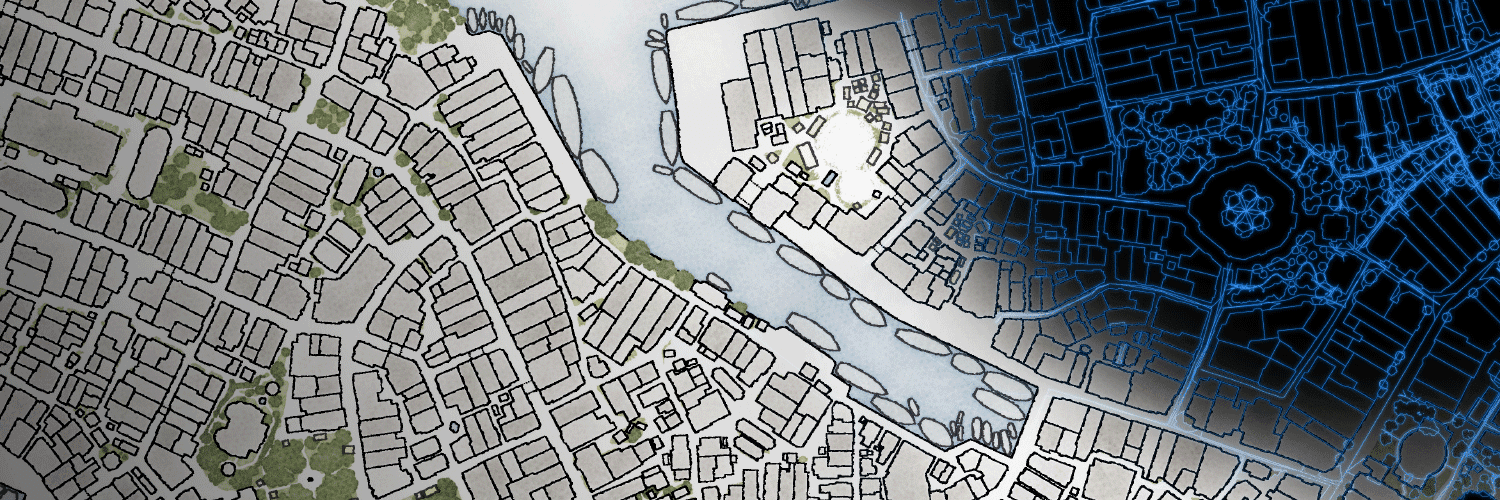
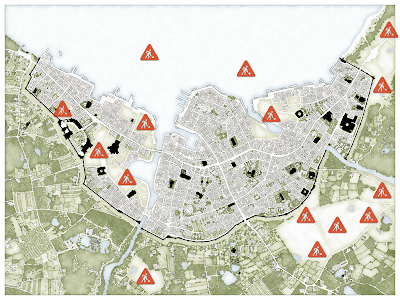
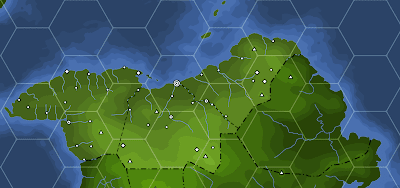
Last post, I teased an image of my latest fantasy RPG project, tentatively titled Hammondal: Light of the Candle Islands. This is a type of book I've wanted to do for a long time: a good old-fashioned city sourcebook, the kind that explores a single town in sufficient depth and breadth to make it a worthy all-in-one setting for fantasy campaigning. Here's a mockup of Hammondal as the map stands this morning:

Be Careful Near the Construction Zones

As you may already know, I sold Uresia: Grave of Heaven to Dyskami Publishing last year, along with its supplements and related material, and they'll be publishing a new BESM edition this fall or winter (including One Last New Chapter from me), which means I needed a new fantasy world to write about and run my campaigns in, having said my tearful goodbyes to Heaven's Grave.

As you probably also know, I have a thing for cities and towns. I love imagining them, designing them, mapping them, writing about them and gaming in them, and some of my favorite RPG books have been devoted to cities as settings. I'm also really drawn to "generic fantasy" as a design arena, partly because I love an underdog and generic fantasy is often dismissed as junk, and partly because the design challenge of making something interesting enough to stand on its own but also socketable in a way that makes it useful for a variety of worlds challenges my design-brain in special ways.

So I got to pondering what the boundaries and untapped potentials of "generic fantasy" actually are when it comes to fantasy cities. What tropes are disposable, subvert-ible, intrinsic? What features are needed, and what typical "features" really aren't? Where are the richest veins for surprise, for inspiration, for characters and adventures?

The city of Hammondal is built from my answers (also wood and bricks and things), and as you can imagine, my answers are more than a little satiric, pulpy, swashbuckly and layered in mystery, horror, comedy and humanistic sympathy. It includes my take on everything I've ever loved in a fantasy city book, and my takes on things I've never seen in a fantasy city book, and just lots of shameless excuses for the kind of RPG design I live for.

It also evokes the tensions deep within its own design challenges, and brings them right to the gameable surface. It's a modestly-sized city on a remote island, in a province of a stumbling Empire where foreign trade is taking deep root. It's the collision point for multiple competing cultures, refugees from a lost realm, powerful nature spirits, a wealthy and influential Church, a hidden community of the dead, a disgraced order of mages, a hospital run by Dwarvish nuns married spiritually to a trickster god, and enclaves of fantasy bohemians ... each of which reflect facets of the "generic" fantasy's contradictions in playful ways.

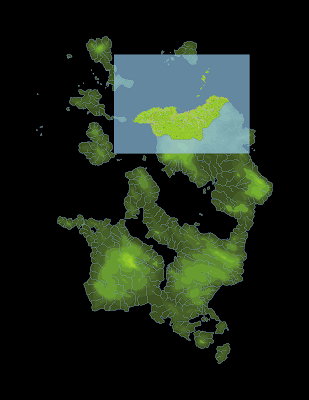
And it does have its own world, just offstage where it needn't trouble anyone, but exerting constant gravity on the design. It's impossible for a city to feel alive without connections to a larger world, so that larger world, too, had to be socketable, made of elements analogous to traditional fantasy ideas while also mixing flavors in surprising ways, and while the city is the focus of the book, the Candle Islands, and the local warlords and Queen not entirely enthused about the Imperial colony on their northern shore, get a couple of pages and maps as well.

The Candle Isles.

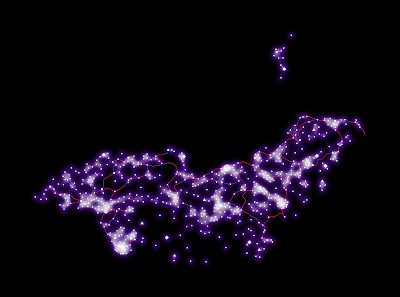
Working Out Which Roads Suck Slightly Less

I Love Hexes More Than Anyone Needs To

I am very excited about this book, this city and this world, so I'll pester this blog about it more than once before the book is done, but I'll wrap this up for now before I get too mushy about it. If you'd like a regular drip of maps-in-progress and design musings, Hammondal has a Twitter account, and I also post images to DeviantArt now and then. If you want to see the real-world stuff I'm imagining while designing Hammondal, my DeviantArt favorites page is full of what I fantasize about (some of which is NSFW, but most of which is trees and old buildings and and dirt roads).

If you've got questions about Hammondal that might make a fun blog post, drop me a line and I'll be ever so grateful. If you've got friendly things to say about my maps, I can always use a little of that, too. Either way, thanks for reading, and I hope you feel the beginnings of my Hammondal excitement, too!


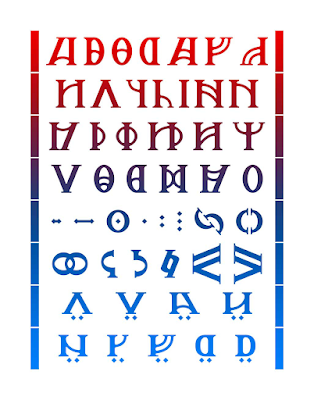
And of Course, There Are New Silly Fonts.

1/25/2021

Porn Logic

I should begin by disclaiming: this article has nothing to do with porn. It's more entries into the RPG Lexicon, terms I use when discussing adventure design.

With that said, let's talk about porn.

Porn can be "about" anything. There are porn movies about pirates, porn movies about spies, porn movies about superheroes and galactic explorers and private eyes and advertising executives. These characters, like any characters in any medium, have goals to pursue and problems to solve: the rival pirates want the treasure map; the new planet is inhabited by intelligent humanoids with which we must make first contact; the grieving widow believes her husband was murdered for the family's cursed emerald, and so on.

It just happens to work out that, every time, that the way to solve these problems, and achieve these goals, is for everybody to engage in the naughty naked sexifying. After a given number of sex scenes, the plot manages to resolve itself in the momentary scene-scraps in-between. Another mystery artfully deduced by Max Hardwood, Private Dick.

The more RPGs lean heavily into the Visible Rules, the more adventure design begins to operate according to Porn Logic. Because visible-leaning play places high importance on things the system can define and resolve, the adventure's problems tend to shape themselves into the game's pre-defined mechanistic loops, which works out because, in such games, the Player Characters are in large part defined by their choices and contributions within those loops. Mechanistic loops are defined by the centrality of Flat Tactics: tactical sub-scenarios defined in system terms, which can be resolved by mechanistic problem-solving and consulting the system, with only occasional need for adjudication by the Game Master.

If the system’s core loop is chase scenes, for example, and the “goal” of the adventure is to rescue a political prisoner, it’ll just so happen that the way to rescue the prisoner is to have and succeed in a series of chase scenes. Next week, when the adventure is about healing a diplomatic rift, it’ll just so happen that the way to heal a diplomatic rift is to have and succeed in a series of chase scenes. In such a game, chase scenes are the optimal response to, and shape of, nearly every core problem, just as the solution in Max Hardwood and the Case of the Lethal Lubricant was to have a series of sex scenes, and when the villainous Madame Lube returned in Max Hardwood Gives Them The Slip, the solution was to - again - have a series of sex scenes. Porn Logic.

And of course, most of the core loops in traditional RPGs are more about fights than chase scenes, but it's useful to recognize that fighting isn't the actual issue here. The issue is how allowing the system to be important exerts gravity over what a game is "about," and whether the game's tactics tend to be "flat."

Videogames depend on mechanistic loops for their success because videogames are made entirely of system. Players can only perform actions accounted for by the system, against challenges defined in system terms. With sufficiently complex systems, or the wild-card of multiplayer participation, you can sometimes get emergent solutions (solutions that the designers didn't explicitly predict) but nothing approaching tactical infinity, because tactical infinity depends on playing outside the system, and that requires a living Game Master.

So, the more an RPG leans into Porn Logic, the more its gameplay begins to resemble that of a videogame ... or a card game, boardgame, or grid-and-counter wargame.

At the opposite end of the spectrum, where the Invisible Rules are more important than the system, and where tactical infinity and tactical roleplay are embraced as the core game experience, the process of adventure design is dramatically different. Mechanistic loops exert little or no pressure on the reality of the PCs, so if the adventure is about "rescuing a political prisoner," the PCs will need to create and implement a rescue. If the adventure is about healing a diplomatic rift, the PCs will need to create and implement diplomatic change.

These problems (and their solutions) are examples of Rich Tactics: tactical challenges and efforts that operate largely outside the game system, requiring frequent adjudication by the Game Master. Instead of relying on the kewpie doll of success appearing at the end of a series of chase scenes, the PCs must create and implement solutions for which no explicit mechanism exists. And so, the GM must prepare problems that need creative solving, rather than "set-piece" loop-sequences that need engaging. It's difficult to overstate how much this can alter the design process, and the resulting game experience.

It will be important to understand, going forward in this series, that at no point on this spectrum do we step outside of rules-based, tactical game design when we create adventures. Rather, we exchange Flat Tactics for Rich Tactics, and swap out the Visible Rulebooks for the Invisible. We don't even necessarily step beyond loops. We step, rather, toward non-mechanistic ones: richly tactical, character-facing loops which afford greater variety, more surprise, and greater potential for strong characterization.

And as always, these are simplified extremes bookending the spectrum of the Traditional RPG. Many systems offer multiple loop-styles ("this is about dogfighting and baking competitions"), every Trad RPG allows (with varying enthusiasm) for tactical infinity, every Trad RPG allows (with varying enthusiasm) for mechanistic loops, many gamers enjoy both Flat and Rich Tactics, and even creative solutions can dip into mechanism for fragments of it (rolling dice to pick a lock as part of a more complex overall plan, for example). But with all those variables accounted for, Porn Logic is still a thing. A big, hard thing.

Thinking in terms of Flat Tactics vs. Rich Tactics, and recognizing the gravitational pull of Porn Logic, are the game design and GMing side of creative vs. mechanistic problem-solving. If you want to support the gameplay of creative solutions, your adventures must provide creative problems.